
London is practical to explore alone when you plan your journeys and stay aware of your surroundings. For safe transport for solo female travellers in London, decide how you’ll travel before setting out, choose reputable services and keep key details close at hand. A little preparation can make airport arrivals and evening trips feel more manageable.
It’s understandable to think carefully about crowded stations, unfamiliar streets and getting back safely after dark. The most reassuring approach is to match your transport choice to the route, time and your comfort level, while keeping someone you trust informed of your plans.
This guide explains how to assess safety in London, stay aware on foot and on public transport, and arrange rides with confidence. It also covers which details to keep accessible and how to plan airport and local journeys, so you can move around the city with greater ease and peace of mind.
Key Takeaways
- Assess your route in context: neighbourhood, lighting and time of day all matter when deciding how to get around.
- Stay attentive in busy stations and tourist areas, keeping your phone and belongings secure and your surroundings in view.
- Before accepting a ride, check the driver and vehicle details, then share your journey plans with someone you trust.
- Save key contacts and travel documents where you can access them quickly; according to the UK Government, call 999 for a crime in progress or immediate danger, and 101 for non-emergencies.
- Plan airport and local journeys ahead, with a suitable alternative in mind if your preferred route feels uncomfortable.
1. Is London Safe for Solo Female Travellers?
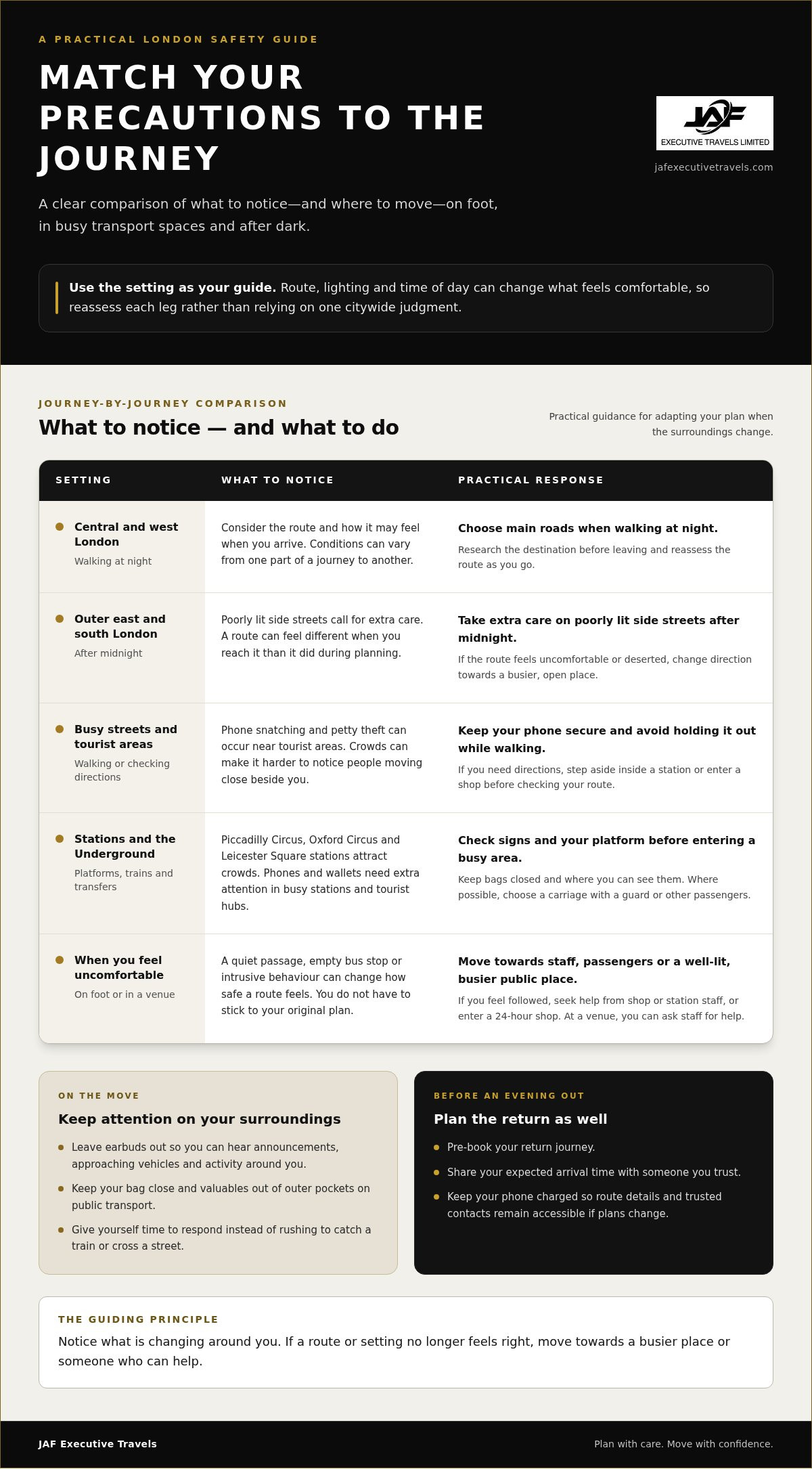
London can be explored alone with thoughtful choices about routes, timing and personal boundaries. Safety varies by setting and situation, so assess each journey rather than relying on one citywide judgment. The Solo Female Travel Safety Index assesses seven variables affecting women travelling solo. It scores destinations from 1 to 4, with 1 representing the safest and 4 the most dangerous. Treat an index score as one planning reference, not a prediction of your individual experience.
Neighbourhood and time of day both shape practical decisions. In central and west London, choose main roads when walking at night. In outer east and south London, take extra care on poorly lit side streets after midnight. Research your destination before leaving, then consider how the route may feel when you arrive. Your travel experience can help you judge what feels comfortable, but unfamiliar surroundings still deserve attention. Planning safe transport for solo female travellers in London means considering each leg of the journey, not just the destination.
Phone snatching and public drunkenness are safety considerations in central London. Keep your phone secure, particularly on busy streets, and avoid holding it out while walking. In nightlife areas such as Soho, Shoreditch and Brixton, advice about drink spiking includes not leaving drinks unattended. Keep your drink with you, and leave a venue if the atmosphere makes you uncomfortable.
Safety for solo female travellers in London also means having a clear response when someone crosses your boundaries. If someone’s behaviour feels intrusive, move towards staff, a busier place or a well-lit public area. In a bar or venue, asking staff, “Is Angela here?” is described as a discreet way to request help. You don’t owe a stranger conversation, an explanation or your personal details.
How safe is the London Underground for women travelling alone? It’s a practical way to cross the city, but crowded stations and tourist hubs call for extra attention to phones and wallets. Stay aware on platforms and trains, and where possible choose a carriage with a guard or other passengers.
What should I do if I experience harassment or feel unsafe on London public transport? Move towards other passengers or staff, and leave the carriage or station area if that helps you reach a busier place. If you feel followed, seek help from shop or station staff, or enter a 24-hour shop rather than continuing alone. Choosing safe transport for solo female travellers in London also means knowing where you can pause and ask for help.
Before an evening out, pre-book your return journey and share your expected arrival time with someone you trust. Sharing your live location can add reassurance while you’re out. Keep your phone charged and carry a power bank, so route details and trusted contacts remain accessible if your plans change.
2. Staying aware of your surroundings
Situational awareness means noticing changes around you, not expecting danger at every turn. On a London street, notice who is nearby, where the pavement leads and which businesses are open. Before entering a station, check the signs and identify your platform instead of stopping in a busy doorway. These small habits help you move with purpose while staying aware of your surroundings.
Busy locations call for particular care. Piccadilly Circus, Oxford Circus and Leicester Square Tube stations attract crowds, so watch your belongings and stay alert to people moving close beside you. Pickpocketing, phone snatching, petty theft and scams can occur near tourist areas and on the Tube. Keep bags closed and where you can see them, especially while boarding, changing platforms or checking a map.
Avoid getting absorbed in your screen as you walk. If you need directions, step aside inside a station or enter a shop before checking your route. Walking with purpose can help you avoid looking distracted, while leaving your earbuds out lets you hear announcements, approaching vehicles and activity around you. Keep enough attention on the street, even when following directions on your phone.
On public transport, choose a place where you can observe the carriage and move towards other passengers if you feel uncomfortable. Check station names and your intended stop before boarding, so you don’t need to search for information while the train is moving. Crowds can make it harder to notice who is nearby, so keep your bag close and valuables out of outer pockets.
After dark, assess each part of the journey as conditions change. A well-lit main street may feel different from a quiet passage or an empty bus stop. If your route becomes deserted, change direction towards an open, busier place, such as a staffed shop or station. You don’t have to continue along a route simply because it was your original plan.
Give yourself time to respond rather than rushing to catch a train or cross a street. If someone’s behaviour concerns you, move towards staff, a group of passengers or an open business. You can also call someone you trust as you walk towards a busier area. At a station, approach an employee and explain plainly that you need assistance.
Stay observant without letting vigilance take over your visit. At a museum, market or restaurant, decide where to keep your bag before settling in, and note the nearest staffed area. When leaving, discreetly check your belongings before stepping into the street. These practical routines support awareness by day and after dark, whether you’re walking or travelling across London.
3. Using reputable taxis and rideshares
A pre-booked ride can simplify an unfamiliar journey, especially after an evening event or when you have luggage. Use a licensed service, arrange the pickup through its official app or booking channel, and avoid unsolicited offers from people approaching you at a station. Before getting in, compare the vehicle and driver details with your booking. If they don’t match, don’t enter.
How much do London black cabs, licensed minicabs and ride-hailing services cost? Black-cab fares are metered, while licensed minicab and ride-hailing fares depend on the route, timing and booking terms. Check the displayed or agreed fare before confirming, and compare the full journey details rather than choosing by price alone.
For an app-booked ride, review the driver’s name, vehicle description and registration shown in the booking. Match each detail in person before approaching the car. Keep the app open until the trip begins, and use its trip-sharing feature if available. A saved booking confirmation also makes it easier to identify your ride in a busy pickup area.
At a station or airport, choose a clear, well-lit pickup point and wait inside where practical. Don’t follow a driver to a different location without confirming the change through the official booking channel. Once seated, confirm the destination and route in the app or with the driver. If the details feel wrong, leave the vehicle in a safe public place and arrange another journey.
- Before booking: Enter the destination accurately and review the fare or fare basis shown.
- At pickup: Match the driver and vehicle details before opening the door.
- During the trip: Follow the route on your phone and share journey details with someone you trust.
- After arrival: Check you have your phone, bag and other belongings before leaving.
What is the TfL Women’s Night Safety Charter, and which services participate? It is a Transport for London initiative inviting organizations to take steps to support women’s safety at night. Organizations participate by signing the charter, so don’t assume a particular taxi, rideshare app or individual service participates unless it identifies itself as a signatory.
Use your judgment throughout the journey. If the driver’s conduct or route makes you uncomfortable, ask to stop in a busy, public place and contact someone you trust. Keep your phone charged, but don’t let checking maps distract you from the vehicle and your surroundings. For an important trip, plan the pickup point and destination before you leave, so you can focus on confirming the ride rather than making decisions under pressure.
4. Keeping emergency contacts and documents accessible
Store essential details in two places: on your phone and separately from it. For example, save a trusted contact under a clear name, then keep their number in a secure note or on a written card. If your phone battery fails or the device is misplaced, the second copy gives you another way to reach someone. Keep the card in a different pocket from your phone.
Make a small travel record before leaving your accommodation. Include its name and address, your booking reference and the route back. Save your transport confirmation as a screenshot, so it remains available if mobile reception drops. If you’re staying at a hotel, keep its contact details with your room information rather than relying on memory.
Keep identity and travel documents easy to locate without carrying every original around London. Store a digital copy of your passport and key booking documents in a protected account, and keep the originals secure. A separate note with your passport number can help you describe the document if it goes missing. Don’t share document images in public messages.
- Trusted contact: Save a name, phone number and preferred way to reach them.
- Accommodation: Record the full address and a direct contact number.
- Journey: Keep the pickup point, destination and booking reference together.
- Documents: Keep digital copies protected and originals secured separately.
Before an evening journey, send your trusted contact the route and expected arrival time. If plans change, update them with the new destination instead of leaving the original information in place. For a late return from a restaurant, for instance, share the pickup location and the name of your accommodation. Clear details help someone understand where you intended to go.
For emergencies, according to the UK Government, call 999 to report a crime in progress or immediate danger, and call 101 for non-emergencies. Keep both numbers accessible in your phone, and remember which situation each number serves. If you’re uncertain how to describe your location, use a nearby station, street sign or recognisable business as a clear reference.
If you lose your phone, use a borrowed device to contact your trusted person and accommodation. A paper contact card can help when saved numbers are inaccessible. Keep your bank’s contact details separate from your payment cards, and store essential travel records away from your wallet. These steps give you options if an item is lost or damaged.
Before leaving each day, review the details you may need: accommodation address, transport booking and emergency contacts. Keep them accessible without displaying private information openly. A few minutes spent organising these records can make an unexpected change easier to manage, whether you need to reroute, contact someone or explain your location to staff.
5. Planning airport and local transport
Start with the airport you’re using and the address where you’ll stay. London’s airports serve different parts of the city, so the most practical route depends on your arrival point and final destination. Check whether your accommodation is near a station or requires another connection. If you land late or have substantial luggage, fewer changes may matter more than choosing the shortest route on a map.
For an airport journey, note the terminal, station or pickup point, and final stop before you depart. Airports can have several transport areas, so follow signs for your chosen service rather than the first crowd leaving arrivals. Save your accommodation address in a map app and write it down separately. This can help if your phone battery runs low during a long arrival.
How can solo female travellers use TfL Safe Spaces, station staff and emergency help? If you see a TfL Safe Spaces sign, go to the marked location and tell staff what assistance you need. Station staff can also help you identify where to wait or how to reach the appropriate service point if disruption leaves you uncertain.
Are London buses and Night Tube services safe for women travelling alone? They can be useful options, but choose a service that suits your route and the time you’re travelling. The Night Tube runs on weekends on the Victoria, Jubilee, Central, Northern and Piccadilly lines. Check service times for your specific journey, including any connecting leg, before relying on a late-night route.
For a bus journey, confirm the stop name and direction before boarding. A route may pass through several neighbourhoods, so check the destination displayed on the bus to avoid travelling the wrong way. If you need to change buses, identify the transfer stop in advance and allow time to find the next stand. A simple route with fewer interchanges can be easier to follow with luggage.
Build a backup into your plan for service changes or missed connections. If a train is delayed, compare the next available route with a bus or another service, rather than leaving the station without a destination. Keep your accommodation address accessible and choose a public place to pause while reviewing options. This gives you time to decide carefully instead of choosing a route in a rush.
For a direct airport journey, a pre-arranged London City Airport chauffeur transfer is one option to consider when planning around your arrival time and destination. The useful takeaway is to decide how each leg connects before travelling, so an airport arrival, local transfer and final walk form one clear itinerary.
JAF Executive Travels: Mercedes-Benz S-Class Chauffeur Service
JAF Executive Travels offers the Mercedes-Benz S-Class Chauffeur Service for solo travellers seeking a pre-arranged, professionally chauffeured journey in London. It can suit an airport transfer, an evening return or a day with several appointments, when arranging the journey in advance helps simplify logistics.
Choose the Mercedes-Benz V-Class Chauffeur Service when travelling with more luggage or companions, or the Mercedes-Benz E-Class Chauffeur Service for another executive travel option. The Range Rover Autobiography Chauffeur Service offers an alternative vehicle. Each journey can be planned around your itinerary, with comfort, punctuality and discretion in mind.
For a more considered way to arrange your London travel, contact JAF Executive Travels to discuss your journey.
Make your next London journey feel considered
Planning safe transport for solo female travellers in London is not about eliminating every uncertainty. It’s about choosing how you want to travel, preparing for changes and keeping control of your next step. Before your next outing, consider which part of the journey would benefit most from being arranged in advance, whether that’s an airport arrival, an evening return or travel between appointments.
A tailored journey can make your plans feel more manageable, particularly when you want a professional chauffeur and a considered itinerary. JAF Executive Travels can plan a private journey around your London travel requirements, with discretion and comfort in mind.
When you’re ready to discuss your plans, get in touch about your London journey. With a little preparation and a travel plan suited to you, you can explore London with greater confidence and enjoy more of the experience.
Frequently Asked Questions
Is London Safe for Solo Female Travellers?
London can be explored alone, though your comfort will depend on your plans and the circumstances of each journey. Make decisions that suit your energy, familiarity with the area and preferred level of independence. For instance, after a demanding day, you might choose a simpler route back rather than add an unfamiliar stop. A flexible itinerary lets you adjust without feeling obliged to stick to every original plan.
Which London transport options are safest for solo female travellers at night?
No single transport option is safest for every person or journey. Compare the route, expected waiting time, number of changes and where you’ll arrive. A public route may suit a familiar journey, while a pre-booked private ride may better match an itinerary with a late destination or several bags. Decide what feels manageable for that specific trip rather than relying on a universal rule.
What are the safest ways to get from London airports to central London alone?
The best choice is the one that fits your arrival terminal, destination and onward plans. Before travelling, check where your chosen service departs and how you’ll reach it from arrivals. If you book a chauffeur journey, provide the correct destination and flight details during booking, then keep the confirmation available. This helps you move from the airport to your onward journey with fewer decisions on arrival.
Which London areas or stations should solo female travellers take extra care in after dark?
Rather than relying on a list of supposedly unsafe stations, assess your immediate surroundings when you arrive. Consider whether the exit leads onto a busy street, whether nearby businesses are open and whether you can orient yourself easily. If the station area feels deserted or confusing, remain in a public, staffed space while choosing another route. Base your decision on current conditions, not reputation alone.

Tom Copper
Tom Copper is a UK-based travel and tourism writer with a deep passion for transforming journeys into compelling stories. Over the years, he has explored both iconic destinations and lesser-known hidden gems, always seeking experiences that create meaningful connections between people and places. His writing reflects a genuine appreciation for culture, history, and adventure, blending practical travel advice with thoughtful personal insights. From vibrant city breaks and scenic coastal escapes to peaceful countryside retreats, Tom shares travel inspiration that feels authentic, relatable, and exciting. When he’s not crafting his next article, you’ll likely find him wandering through local markets, sampling new cuisines, or capturing unique moments through his camera lens. For Tom, travel is never just about ticking destinations off a list—it’s about the stories, emotions, and memories created along the way.
Safe transport for solo female travellers in London
London is practical to explore alone when you plan your journeys and stay aware of…
Chauffeur for Executive Relocation Home Search in London
Can a chauffeur make a London home-search day easier to manage? Yes, when travel between…
How to Add a Stop to a Pre-Booked Chauffeur Trip
Could an unrecorded stop put the rest of your carefully planned journey under pressure? If…
Making a Special Occasion Memorable with a Chauffeur
What if the journey felt like part of the celebration, rather than another detail to…

How to Impress a Client with an Airport Pickup Service
A client’s first impression of your organisation can take shape before the meeting even begins.…

How Much Does It Cost to Hire a Driver for a Day in the UK?
What should you consider when arranging a driver for a day? If you’re asking how…

Executive Chauffeur for London Business Meetings
A morning briefing, a client meeting across town and a final appointment before the day…
Business Class Chauffeur Experience in London: What to Expect
If you’re comparing options for a “business class chauffeur experience london,” look beyond the vehicle.…
Last-Minute Airport Chauffeur London: A 2026 Booking Guide
When a flight or itinerary changes at short notice, finding a vehicle is only part…
Luxury Family Airport Transfer in London: A Calmer Journey with Children
What if the calmest airport journey with children begins before you choose a vehicle? When…