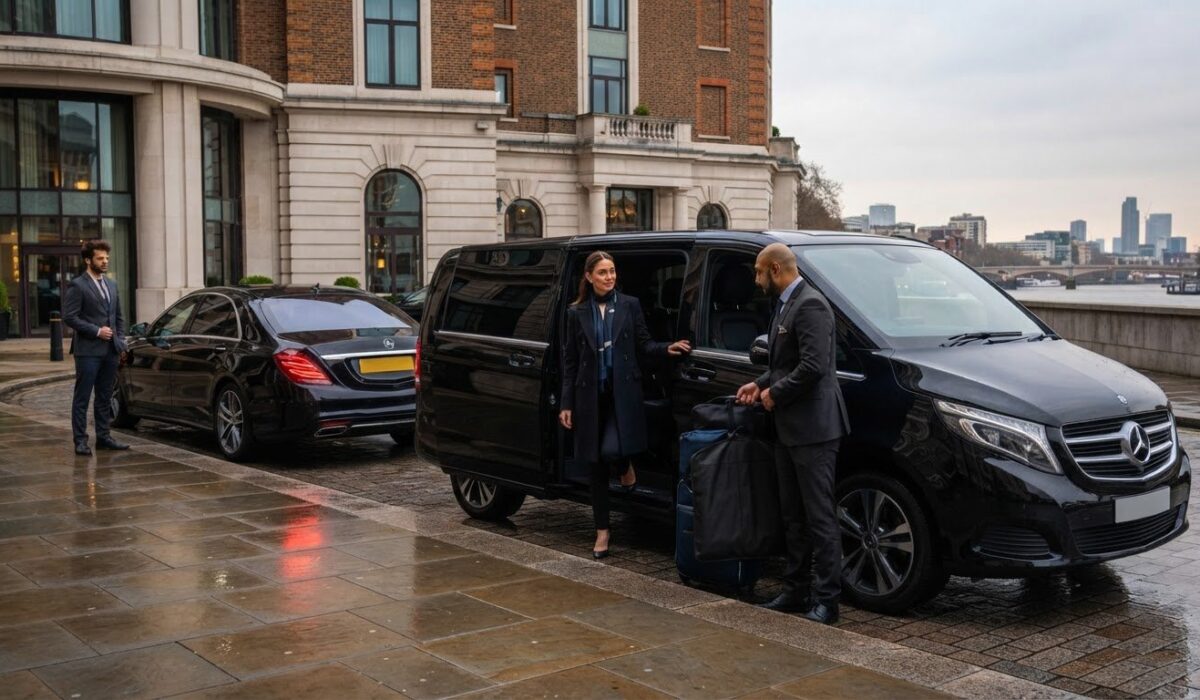
A vehicle with enough seats can still be the wrong fit for a delegation. Diplomatic ground transportation coordinates travel between airports or railway stations, hotels and meeting venues, taking arrival patterns, schedules, luggage, accessibility and local conditions into account. Managing ground transport for international delegations also means matching vehicles to the group: executive SUVs suit principals and small groups, high-roof executive vans keep delegates together, and coaches accommodate larger movements.
Punctual arrivals and a calm journey matter, but the challenge is aligning every transfer with a changing programme and passengers’ needs. This guide explains what diplomatic ground transportation involves, how local partners coordinate airport pickups and venue movements, and how to choose vehicles for a trade delegation. It also shows how a tailored itinerary and clear coordination can keep each stage orderly, discreet and comfortable, so delegates can focus on their visit rather than the logistics between appointments.
Key Takeaways
- Build the movement plan around passenger needs, luggage, access requirements, and the full itinerary.
- Coordinate local partners so airport arrivals, hotel transfers, and venue schedules work as one plan.
- Set vehicle holding arrangements around flight updates, allowing for delays without relying only on a fixed pickup time.
- Choose transport by the role and size of each group, keeping principals comfortable and larger movements orderly.
What is diplomatic ground transportation?
Diplomatic ground transportation coordinates official travel between arrival points, accommodation, meetings and venues. Managing it means aligning passenger needs, vehicle capacity, access arrangements, routes and contingency plans before each movement begins.
Vehicle Capacity and Accessibility Planning
Start with the passenger manifest, then match each vehicle to the group’s size, luggage and accessibility needs. A delegation carrying presentation cases may need more luggage capacity than the passenger count alone suggests. Record mobility requirements and any child seat needs in the movement plan. For example, separate vehicles may suit principals and staff if their schedules or access needs differ. This helps passengers board comfortably and prevents baggage from disrupting the next transfer.
Route Planning and Advance Reconnaissance
Before travel, review routes, pickup and departure points, accommodation, venues, access arrangements and alternatives. Connect each meeting to its arrival window and identify suitable vehicle staging locations. The advance manifest should match passengers to movements, pickup points and luggage needs. If a venue entrance cannot accommodate a large vehicle, specify another approved drop-off point. Contingency plans should also map alternate routes and arrangements for extraction or evacuation, with responsibilities clear to the movement team.
Local Access and Transport Information
Arrange transport using arrival times, passenger names, hotel and venue addresses, meeting schedules, luggage details, accessibility needs and a designated movement contact. Local traffic affects journey timing, while parking and venue access determine where vehicles can wait, load or unload. Permits and entry procedures can shape routes and staging, so local coordinators should align these details with venue instructions. The U.S. Environmental Protection Agency notes that forums should be relatively easy to reach and ideally near public transit. In rural communities, limited transit may narrow alternatives, so a local review helps missions plan suitable transfers.
Coordinating international ground transport through local partners
Local partners bridge differences in operating practices, languages and transport arrangements across destinations. A central movement lead can keep decisions aligned while each local coordinator handles practical details on the ground.
Local Partner Coordination
Set a clear division of responsibilities before travel begins: identify who approves itinerary changes, who briefs local drivers, and who reports completion of each movement. A shared, current itinerary helps prevent one city’s coordinator from acting on an outdated schedule. For corporate visits with several stops, chauffeur travel coordination can form part of the wider ground transport plan.
Airport, Rail, Hotel, and Venue Transfers
Give each transport handover a named contact and a clear confirmation method. For example, the airport-arrival coordinator can pass onward instructions to the hotel contact, who confirms the next departure point. Commercial airport and private terminal procedures may differ, so record the correct meeting instructions for each arrival. Keep interpreter or delegate changes attached to the relevant movement record.
Multi-City and Cross-Border Itineraries
For an itinerary spanning cities or countries, assign an accountable local coordinator to each segment and establish how they hand responsibility to the next operator. Keep destination names, timing and passenger details consistent across handovers. If an embassy team changes its programme while travelling, the central movement lead can distribute the approved revision and record which local contacts have acknowledged it.
Insurance and Liability Coverage
Assess insurance and liability arrangements against the movements, operators and locations involved. Written documentation should identify the operator for each segment, applicable coverage, and how incident reporting and claims are handled. If a local partner subcontracts a journey, record which company operates it and how responsibility is allocated. This gives the organising team a clear basis for reviewing coverage without assuming one arrangement applies everywhere.
Which vehicles suit a trade delegation?
Vehicle selection is only part of the movement plan; timing, staging and passenger identification matter too. For airport arrivals, stage vehicles according to actual flight status rather than a fixed time. This helps drivers respond to delays while keeping the principal’s pickup aligned with the onward itinerary.
Set holding arrangements before departure, including where each vehicle waits and who communicates changes. At an airport, use the agreed pickup point and ensure the driver’s arrival instructions match the delegation’s plan. If a flight is delayed, update the staging time and the next hotel or meeting transfer together. This prevents one change from disrupting the sequence of later visits.
Hotels and venues need their own staging plans. Assign a pickup location, departure time and movement contact for each stop. For example, if schedules differ, position the principal’s vehicle separately from vehicles carrying other delegates. Drivers should receive the current itinerary and change instructions, rather than relying on an outdated schedule. Keep waiting locations clear of passenger loading points.
Vehicle identification should be discreet and unmistakable to the intended passengers. Share the agreed vehicle description and driver identification through the delegation’s designated contact, not through public signage. For a multi-vehicle movement, assign each vehicle a clear passenger group and destination. The order should follow the itinerary: the vehicle for the first departure or arrival must be ready at the appropriate point, while other drivers follow their assigned timings.
Review vehicle allocations whenever the visit schedule changes. A delayed meeting may affect hotel departures, airport returns or the sequence of venue pickups. Keep one current movement schedule for drivers and the delegation contact, and communicate revisions through the agreed channel. This keeps each vehicle’s role clear without assuming every passenger travels together.
Matching SUVs, executive vans, and coaches to delegation size
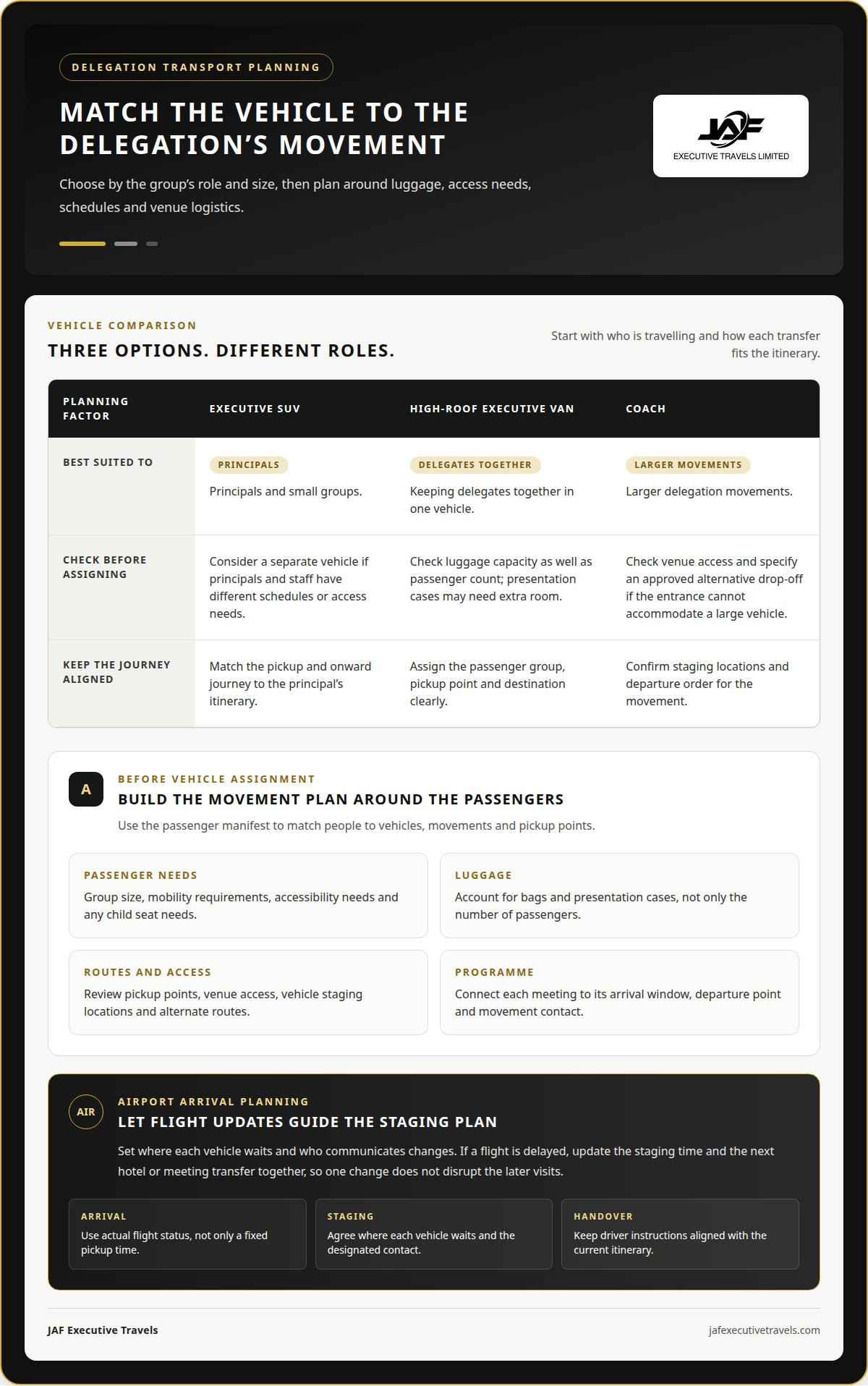
Choose vehicles by passenger group, luggage, itinerary and destination, not headcount alone. Full-size executive SUVs suit principals and small groups; high-roof executive vans keep delegates together, while coaches serve larger movements. Sedans can suit an individual principal when the schedule calls for separate travel.
For an SUV, consider whether the principal needs an independent arrival or departure time. A sedan also suits a separate journey for one passenger, while an SUV may fit a small group with luggage. For example, assign separate vehicles if the principal’s meeting schedule differs from the wider delegation’s visits. Base the choice on each movement’s purpose and passengers’ needs.
Executive vans work well when delegates share a destination and departure time. They keep the group together between hotels, meetings and venues, while a coach can carry a larger group on a shared transfer. Check passenger numbers alongside luggage capacity and boarding needs. A full vehicle may not suit the journey if baggage leaves too little room for passengers or access.
A motorcade is a coordinated group of vehicles, not a substitute for choosing suitable passenger vehicles. Its order should follow the movement plan and any protocol agreed with the delegation’s protective detail. For example, position the principal’s vehicle according to the agreed arrival sequence, and assign other vehicles to staff and support roles. Chauffeurs need clear destinations and consistent instructions.
Before confirming allocations, group passengers by shared timings, destination, luggage and access needs. Match each group to a vehicle, then review the plan against the day’s meetings and departure schedule. For a trade delegation, this might mean an SUV for a principal, a van for delegates attending the same visits, and a coach for a larger shared transfer. The right combination keeps movements orderly without placing everyone in one vehicle.
Plan chauffeur transport for your delegation around its passenger groups, destinations, and itinerary.
JAF Executive Travels
JAF Executive Travels provides chauffeur travel tailored to the itinerary, passenger roles and preferred vehicle type. The Mercedes-Benz S-Class Chauffeur Service and Range Rover Autobiography Chauffeur Service suit individual principals or smaller movements, while the Mercedes-Benz V-Class Chauffeur Service can accommodate delegates travelling together. The Mercedes-Benz E-Class Chauffeur Service is another executive option for scheduled journeys.
Share the movement plan, destinations, passenger requirements and timing to shape a suitable arrangement. For airport arrivals, hotel transfers or journeys between meetings, a professional chauffeur and a clearly planned itinerary help keep each trip composed and discreet.
Contact JAF Executive Travels to discuss chauffeur transport for your delegation.
Set Your Delegation’s Next Movement in Motion
Turn the programme into a transport brief that supports decisions before the delegation travels. Consider how each movement serves the visit’s purpose: a quiet interval before negotiations, time for colleagues to prepare together, or a composed arrival ahead of a formal engagement. Managing ground transport for international delegations means shaping these details around the experience officials and delegates need, not just the distance between destinations.
After the visit, a short review can improve the next programme. Note which arrangements supported the schedule, where instructions caused uncertainty, and which preferences should carry forward. This gives future coordinators a useful starting point without assuming every delegation has identical needs.
JAF Executive Travels offers Mercedes-Benz S-Class, V-Class, and E-Class Chauffeur Services for tailored executive journeys. Share your requirements and discuss an arrangement suited to your delegation. Contact JAF Executive Travels to take the next step with confidence.
Frequently Asked Questions
What is VIP delegation transport?
VIP delegation transport is shaped around official engagements and passengers’ roles. It can distinguish a principal’s movements from those of advisers, interpreters and other delegates, rather than treating the party as one undifferentiated group. For example, a principal may have a private programme while colleagues attend a separate working session. Clear, role-based arrangements help maintain appropriate discretion throughout the visit.
How to plan ground transportation for an international delegation
Managing ground transport for international delegations benefits from a clear approval structure and shared programme format. Identify who can authorize itinerary changes, distinguish confirmed appointments from flexible activities, and record local time for each destination. This is especially useful when an itinerary crosses time zones: a clearly labelled schedule helps prevent arrival or meeting times being read in the wrong zone.
How to coordinate airport transfers, hotel shuttles, and event transportation
For event departures, plan how attendees will find onward transport after a meeting or reception. Specify a recognizable collection point and give participants a discreet way to receive their vehicle assignment. If guests are travelling to different destinations, group departure instructions by destination instead of sending one general announcement. This reduces uncertainty at the end of a busy programme.
What security and protocol requirements apply to transportation for foreign officials
There is no single protocol for every visiting official or host setting. The delegation’s authorized liaison should communicate applicable instructions and coordinate them with its designated security lead. Clarify the chauffeur’s transport role separately from any protective role, and do not imply that ordinary driving arrangements provide personal protection. This distinction keeps responsibilities clear without making assumptions about local rules.
How to manage interpreters, luggage, accessibility, and special transport needs
Agree whether interpreters accompany a particular official throughout the programme or join selected appointments. This affects seating plans and how the interpreter moves between engagements. For accessibility, ask what assistance the passenger prefers rather than making assumptions based on a general label. If a delegate brings specialist equipment, record its handling needs separately from ordinary baggage so the relevant team can plan respectfully.
What are best practices for transportation schedules, dispatch, and contingency planning
Use a controlled daily run sheet that identifies its version, local time zone and the person authorized to approve changes. Include operational milestones such as passenger-ready time and when a vehicle is released for its next assignment. After a programme change, retire superseded copies rather than leaving several schedules in circulation. A brief end-of-day review can capture unresolved adjustments for the next day’s movements.
How to vet and contract ground transportation providers for international delegations
Before contracting, identify the operator for each movement, including any subcontractor, and document applicable insurance, liability, incident reporting, and claims arrangements. Set clear responsibilities for itinerary changes, driver briefings, and movement confirmations, and book once the programme is known to improve the chance of securing suitable vehicles and briefed chauffeurs.

Tom Copper
Tom Copper is a UK-based travel and tourism writer with a deep passion for transforming journeys into compelling stories. Over the years, he has explored both iconic destinations and lesser-known hidden gems, always seeking experiences that create meaningful connections between people and places. His writing reflects a genuine appreciation for culture, history, and adventure, blending practical travel advice with thoughtful personal insights. From vibrant city breaks and scenic coastal escapes to peaceful countryside retreats, Tom shares travel inspiration that feels authentic, relatable, and exciting. When he’s not crafting his next article, you’ll likely find him wandering through local markets, sampling new cuisines, or capturing unique moments through his camera lens. For Tom, travel is never just about ticking destinations off a list—it’s about the stories, emotions, and memories created along the way.
Managing Ground Transport for International Delegations
A vehicle with enough seats can still be the wrong fit for a delegation. Diplomatic…
Luxury chauffeur transport to Goodwood for individuals and groups
Yes, you can hire a luxury chauffeur to the Goodwood Festival of Speed. Goodwood House,…
Car Service from Canary Wharf to Heathrow: How Much
A car service from Canary Wharf to Heathrow covers approximately 37 km and typically takes…
Mercedes V-Class luggage capacity and suitcase space
The longest Mercedes V-Class doesn’t automatically make every journey easier to plan. Mercedes V-Class luggage…

Chauffeur Driven Tour of Bath and Stonehenge from London
A private chauffeur driven tour of Bath and Stonehenge from London lasts 10 hours, bringing…
Private car service to Wimbledon with waiting and return pickup
A smooth Wimbledon journey depends on planning the return as carefully as the arrival. Book…
Chauffeur Driven to Cheltenham Festival Gold Cup
Being chauffeur driven to the Cheltenham Festival Gold Cup doesn’t have to mean arranging a…
Goodwood Festival of Speed transport from London by private car
For Goodwood Festival of Speed transport from London, a private car transfer gives you a…
Celebrity Transport With Non-Disclosure Agreements and Privacy
A discreet vehicle is only one part of a private journey. Celebrity transport with a…
Car service from The Goring Hotel to Farnborough
A car service from The Goring Hotel to Farnborough is a pre-arranged chauffeur transfer, with…