
A discreet vehicle is only one part of a private journey. Celebrity transport with a non-disclosure agreement pairs written expectations with careful coordination to help protect personal details, without promising complete anonymity.
For a public figure, privacy starts before pickup and continues through every handoff. Representatives need a clear way to coordinate travel while limiting unnecessary circulation of the passenger’s preferences, schedule and identity. A written agreement can support that process, but it is useful only when everyone involved understands and follows it for the specific assignment.
This guide explains how to approach confidentiality terms, chauffeur responsibilities, discreet arrivals and driver screening for high-profile travel. It also covers practical questions, such as how a vehicle can and cannot reduce attention, and how to match the transport plan to the passenger’s needs. With these points in mind, you can plan for comfort, professionalism and personal discretion.
Key Takeaways
- Assess vehicle discretion as one part of privacy planning, alongside booking details, passenger information and journey handling.
- Learn which topics a chauffeur NDA can cover, including conversations, routes, documents and unauthorised recordings.
- Plan arrivals with routing, staging and venue access in mind, especially when close protection or event schedules shape the journey.
- Understand how driver vetting and a Mercedes-Benz S-Class Chauffeur Service can support a more considered travel experience.
Confidentiality agreements and passenger privacy
A written confidentiality agreement defines private passenger details and how staff must handle them. Risks include vague scope, obligations that extend beyond the ride, and terms that seem to prevent disclosures required by law or needed in a safety emergency.
Private Aviation and Airport Pickups
Private aviation pickups require coordination between the flight representative, ground dispatch and receiving chauffeur. Agree in advance who shares the passenger’s name, where the vehicle waits and which contact confirms the handoff. A private terminal offers dedicated passenger processing, but the transfer to the vehicle still needs clear instructions. For example, dispatch can send vehicle details to the representative without circulating the celebrity’s identity.
Confidential Reservations
Privacy starts at booking. A VIP reservation may use a representative’s name rather than the passenger’s, while dispatch retains only the information needed to operate the trip. Decide which staff can view the itinerary and how records will be retained. For celebrity transport under an NDA, agree on the booking name, contact channel and identity-handling process before pickup instructions circulate. This limits exposure across emails and call sheets.
Chauffeur Continuity and Dispatch Privacy
Using the same chauffeur throughout a press-tour day can reduce handovers between hotels and media venues. Continuity also lets the driver follow schedule changes without asking passengers to repeat sensitive details. Restrict itinerary access, secure phones and other devices, and protect in-vehicle Wi-Fi from outside access. Send updates through an agreed channel rather than broad group messages.
Discreet Itineraries
Share only the itinerary details each person needs. For an hourly booking with several stops, separate the passenger’s identity from pickup notes where practical, then send route and timing changes through controlled dispatch. Keep trip logs to operationally necessary information, not personal commentary. The NDA should cover conversations, routes, documents and photographs, state how long confidentiality lasts, and allow disclosures required by law or needed in a safety emergency.
Chauffeur confidentiality policies and signed NDAs
In the United States, there is no single nationwide rule on NDA enforceability. The wording, applicable state law and circumstances all matter. Before sharing passenger details or confirming an assignment, agree on the confidentiality terms with the chauffeur service.
Confidentiality should be part of professional service, not paperwork completed after dispatch.
Chauffeur NDA Clauses
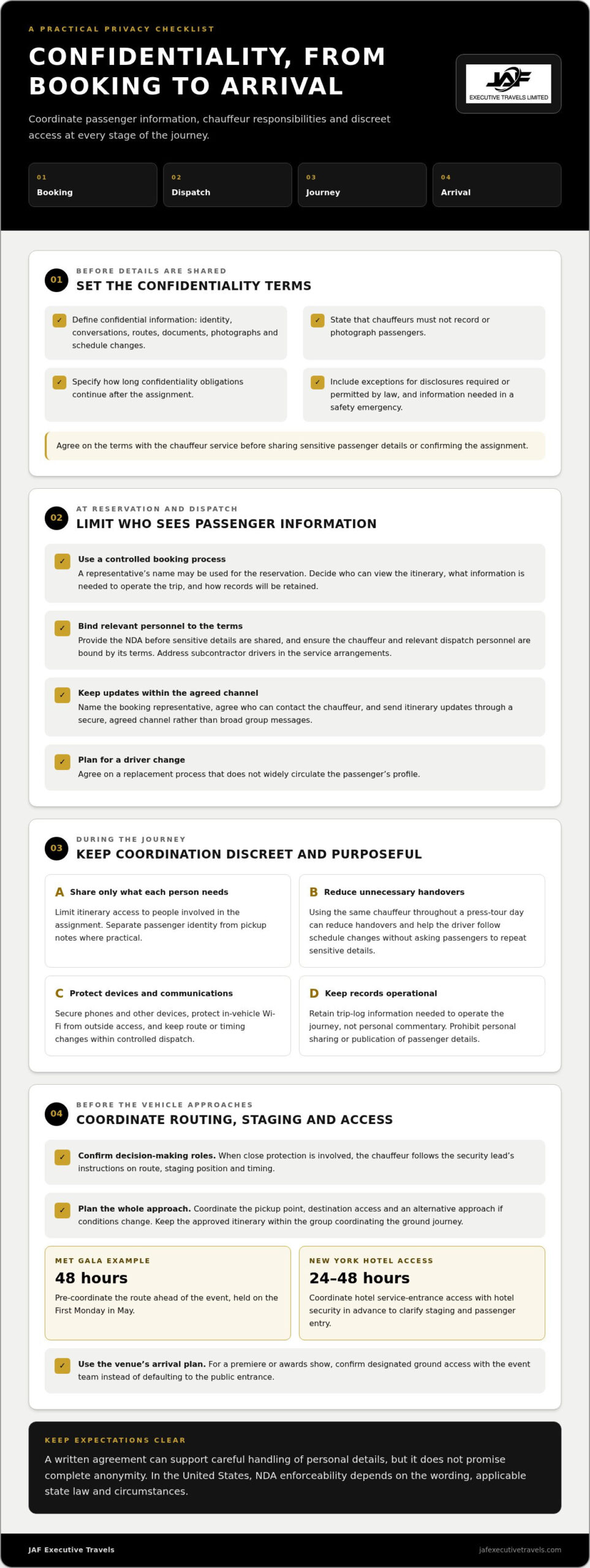
Define what counts as confidential: passenger identity, conversations, routes, documents, photographs and schedule changes. State that chauffeurs must not record or photograph passengers, and specify how long the duty continues after the assignment. Include exceptions for disclosures required or permitted by law and for information needed in a safety emergency. Clear wording helps everyone understand both the restriction and its limits.
Scope of Chauffeur Confidentiality
Confidentiality covers more than conversations inside the car. A chauffeur may see an executive’s itinerary, hear calls from an assistant or learn which entrance a public figure uses. Set out how such details are handled across the service, including by dispatch staff and any subcontractor drivers. Limit access to people who need the information for the assignment, and prohibit personal sharing or publication.
Hiring a Chauffeur Under an NDA
Name the representative coordinating the booking, describe the assignment and specify the passenger information the chauffeur needs. Provide the NDA before sharing sensitive details, and ensure the chauffeur and relevant dispatch personnel are bound by its terms. Agree on a secure channel for itinerary updates and a process for replacing a driver without widely circulating the passenger’s profile.
For a multi-stop executive schedule, clarify who approves route changes and who can contact the chauffeur. A professional car service should communicate the confidentiality policy to assigned personnel and address breaches through defined remedies, which may include damages or injunctive relief. If you are arranging discreet chauffeur travel, carry these requirements into the booking conversation and written instructions.
Paparazzi-aware routing and discreet arrivals
Discreet arrivals rely on coordinated routing, staging and venue access, not simply a quieter vehicle. Agree on the itinerary and decision-making roles before the chauffeur approaches a high-profile location.
Route Planning for Paparazzi Avoidance
When a celebrity travels with close protection, the chauffeur follows the security lead’s instructions on route, staging position and timing. Share the approved itinerary with those coordinating the ground journey, then keep updates within that group. Plan for the pickup point, destination access and an alternative approach if conditions change. The security lead remains central to decisions.
For a Met Gala arrival, pre-coordinate the route 48 hours ahead of the event, held on the First Monday in May. This gives the transport team and security detail time to align timing and vehicle positioning. Avoid circulating that plan beyond those who need it.
Discreet Arrivals
At a premiere or awards show, use the venue’s production plan for drop-offs rather than defaulting to the public entrance. Confirm the designated ground access with the event team, then align the chauffeur’s approach and timing with that plan. In New York City, coordinate hotel service-entrance access with hotel security 24 to 48 hours in advance. That step clarifies where the vehicle can stage and how the passenger enters.
For private aviation, coordinate the aircraft-to-vehicle handoff with the security detail and ground contact. Limit the passenger’s name and arrival timing to the people arranging the pickup.
Paparazzi Protocols
Before departure, agree who can authorize a route change, who communicates with the chauffeur and which entrance the party will use. For concert, festival and stadium transfers, plan load-in access, backstage entrances and post-show exits with the tour or venue contact. One named contact helps prevent conflicting directions during a busy arrival.
If photographers gather unexpectedly, the chauffeur should follow the security lead’s instructions rather than improvise. Keep the itinerary current through the agreed contact, and avoid announcing changes in public-facing messages.
Driver vetting and confidentiality enforcement
Privacy depends on both the person assigned and how written standards are applied. Consider screening practices alongside signed commitments and the service’s process for managing an assignment from allocation through completion.
Driver Vetting
For a high-profile assignment, driver screening can include criminal background checks, driving-record reviews and references from previous employers. Checks should be refreshed regularly, with driving records reviewed periodically rather than only at hiring. Drug screening may also be a condition of continued employment. These measures help assess suitability before a chauffeur receives a passenger’s itinerary or airport pickup details.
Vetting and assignment readiness are related but distinct. The assignment brief should clarify the chauffeur’s responsibilities, including who directs changes and what professional conduct the passenger expects. A manager can review whether the assignment suits the chauffeur’s experience and document the allocation decision. This creates an accountable handoff without sharing unnecessary personal context.
Confidentiality Enforcement
A signed NDA gives chauffeurs a written standard for handling passenger information. A named manager should be responsible for receiving concerns and following the organisation’s stated process. Clarify internally who reviews a reported issue, who can pause an assignment and who communicates with the passenger’s representative. Clear responsibility helps avoid uncertainty in a sensitive situation.
After a journey, review whether the agreed procedures were followed, including communication boundaries and professional conduct. Keep any performance record focused on the assignment and its requirements, rather than adding personal commentary about the passenger. Use the findings to refine staff briefings and future allocations. For discreet chauffeur travel, arrange a private chauffeur journey with clear passenger-handling instructions.
JAF Executive Travels: Mercedes-Benz S-Class Chauffeur Service
JAF Executive Travels provides a Mercedes-Benz S-Class Chauffeur Service for executive and high-profile journeys where comfort and discretion matter. Share the itinerary and confidentiality requirements when arranging your journey, so the travel plan can reflect your schedule.
The Mercedes-Benz V-Class Chauffeur Service can suit travel with additional passengers, while the Mercedes-Benz E-Class Chauffeur Service offers another executive travel option. For a larger vehicle, consider the Range Rover Autobiography Chauffeur Service. Choose based on passenger needs, luggage and the journey plan.
A chauffeur journey can support privacy through careful coordination, but the NDA’s terms should be agreed directly between the relevant parties. For a tailored booking, contact JAF Executive Travels or visit jafexecutivetravels.com.
Set the Standard for Your Next Journey
Planning celebrity transport with a non-disclosure agreement lets you set expectations before travel begins. Consider what a successful journey means to the passenger: how much interaction they prefer, who should coordinate decisions and how the plan can adapt to changing priorities. A clear brief keeps those choices intentional and gives everyone a shared point of reference.
For a tailored conversation about your next journey, contact JAF Executive Travels. Thoughtful planning can make the experience feel composed from the first pickup to the final arrival.
Frequently Asked Questions
Are your VIP vehicles low-profile?
Not every premium vehicle is visually anonymous, and a luxury category alone cannot guarantee low visibility. JAF Executive Travels provides premium chauffeur transport, but assess the vehicle in the context of its arrival. Consider its exterior, how familiar it may look to the passenger and whether the pickup feels conspicuous. Treat vehicle choice as one factor, not proof of anonymity.
Do your chauffeurs sign NDAs for VIP work?
JAF Executive Travels chauffeurs receive training in client confidentiality. If an assignment requires a signed NDA, include the agreement in the written arrangements before sharing sensitive material. Specify who signs for each party and who can raise questions about the terms. This makes the commitment explicit rather than treating training as a substitute for a signed document.
How Do Providers Enforce Confidentiality in Practice?
Services can make responsibilities auditable by recording which staff received assignment-specific instructions and who approved access to them. A supervisor can review those records after the journey and address gaps through staff guidance or management follow-up. For example, if an unauthorised person receives a schedule, document the incident and identify where the handoff failed. This creates a practical basis for improving future assignments.
How do you protect confidentiality?
JAF Executive Travels chauffeurs are trained in client confidentiality. Support careful handling by choosing one authorised representative for passenger-related decisions and avoiding sensitive conversations in shared settings. Before travel, clarify how the chauffeur should address the passenger and who can approve a change. These preferences help create a composed experience without unnecessary discussion during the journey.
Is VIP transportation available 24/7?
Yes, JAF Executive Travels provides 24/7 support and availability for urgent transport requirements. For an out-of-hours request, have the essential travel details ready, such as the pickup point, destination and timing. A representative can communicate any changes as plans develop. This gives the transport team practical information to coordinate the request, particularly when an airport arrival or executive schedule shifts.
What is celebrity transportation with a non-disclosure agreement?
It is a private chauffeur journey arranged with written confidentiality terms for the assignment. The passenger or representative can use those terms to set expectations with everyone coordinating the transport. Treat the agreement as a documented framework for the journey, not a substitute for thoughtful planning. Its wording should fit the assignment and identify who is responsible for following it.

Tom Copper
Tom Copper is a UK-based travel and tourism writer with a deep passion for transforming journeys into compelling stories. Over the years, he has explored both iconic destinations and lesser-known hidden gems, always seeking experiences that create meaningful connections between people and places. His writing reflects a genuine appreciation for culture, history, and adventure, blending practical travel advice with thoughtful personal insights. From vibrant city breaks and scenic coastal escapes to peaceful countryside retreats, Tom shares travel inspiration that feels authentic, relatable, and exciting. When he’s not crafting his next article, you’ll likely find him wandering through local markets, sampling new cuisines, or capturing unique moments through his camera lens. For Tom, travel is never just about ticking destinations off a list—it’s about the stories, emotions, and memories created along the way.
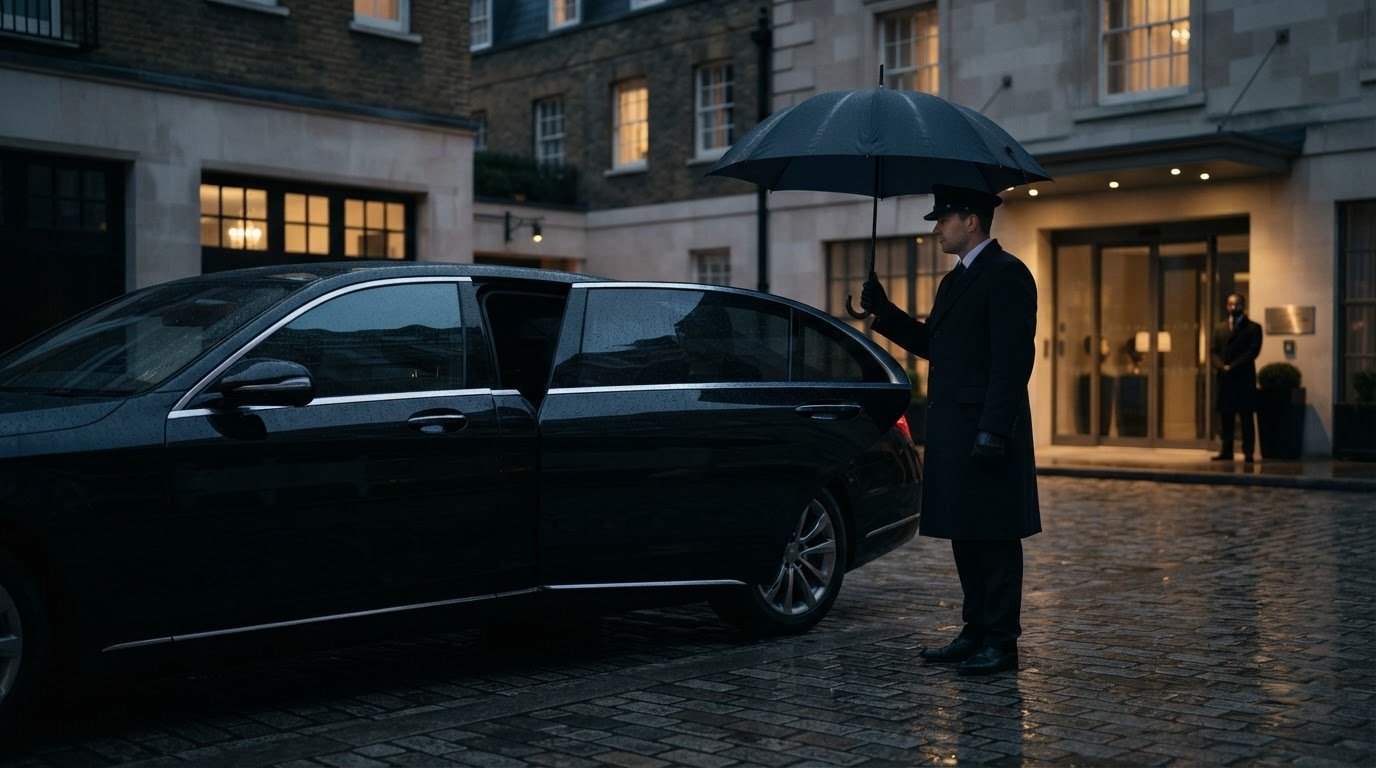
Celebrity Transport With Non-Disclosure Agreements and Privacy
A discreet vehicle is only one part of a private journey. Celebrity transport with a…
Car service from The Goring Hotel to Farnborough
A car service from The Goring Hotel to Farnborough is a pre-arranged chauffeur transfer, with…
The Connaught Hotel to Heathrow Terminal 5 Car Service Cost
A punctual airport transfer is about more than the distance on the map. The Connaught…
Chauffeur from St Pancras International to Your Hotel
A chauffeur from St Pancras International to your hotel can simplify your arrival. Choose a…

Range Rover Chauffeur for Country Estate Visits
A Range Rover chauffeur for visiting country estates offers a comfortable way to travel, with…
Private car to the fat duck bray
A private car to The Fat Duck in Bray can approach from junctions 8 or…

Ground transport logistics for private aviation clients in the UK
Ground transport logistics for private aviation clients in the UK depend on matching the vehicle…
Safe transport for solo female travellers in London
London is practical to explore alone when you plan your journeys and stay aware of…

Chauffeur for Executive Relocation Home Search in London
Can a chauffeur make a London home-search day easier to manage? Yes, when travel between…
How to Add a Stop to a Pre-Booked Chauffeur Trip
Could an unrecorded stop put the rest of your carefully planned journey under pressure? If…