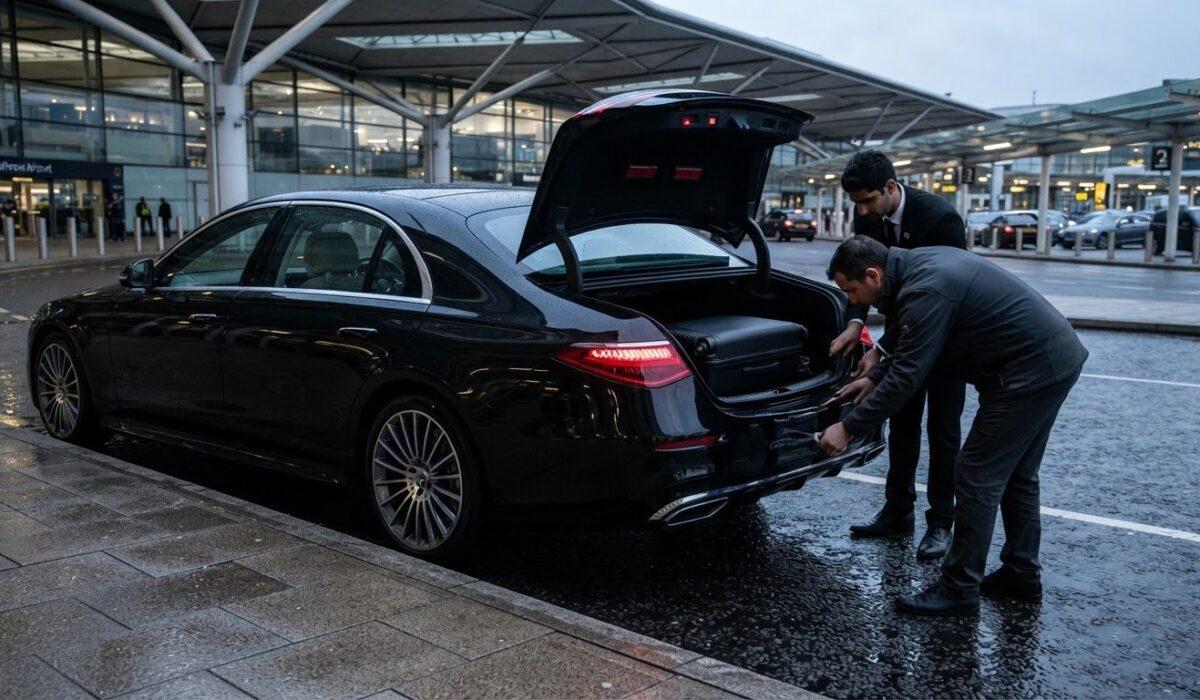
A chauffeur company’s commercial auto insurance is the primary cover for business vehicles, but it isn’t the whole picture. When considering what insurance a chauffeur company holds, look for commercial auto liability, with collision and non-collision cover for damage to its own vehicles, and general liability for certain business risks beyond driving.
Before booking, it is reasonable to ask what insurance a chauffeur company holds, especially when punctuality, comfort and safe travel matter. The specific cover depends on the company’s policies and terms: general liability, for example, does not replace commercial motor insurance for passenger journeys.
This guide explains how commercial motor insurance relates to chauffeur travel, what collision and non-collision cover may protect, and where general liability may apply. It also describes hired and non-owned vehicle cover, helping you understand the different protections involved in professional chauffeur operations and make a more informed travel decision.
Key Takeaways
- Commercial auto insurance is distinct from general liability and may address third-party injury or property damage connected to a company vehicle, subject to policy terms.
- Collision and non-collision coverage can protect company vehicles against certain damage, theft, vandalism, and weather-related loss.
- General liability may apply to some business risks outside driving, such as incidents during boarding, depending on the policy.
- For airport travel, understand whether the chauffeur is employed by or contracted through the transportation company and how the vehicle is covered for commercial use.
Are Chauffeurs Licensed and Insured for Airport Travel?
Airport journeys involve paid passenger transport, so a chauffeur’s insurance should reflect that use. The relevant documents and requirements vary according to the operating area and licensing authority.
Commercial and Personal Motor Policies
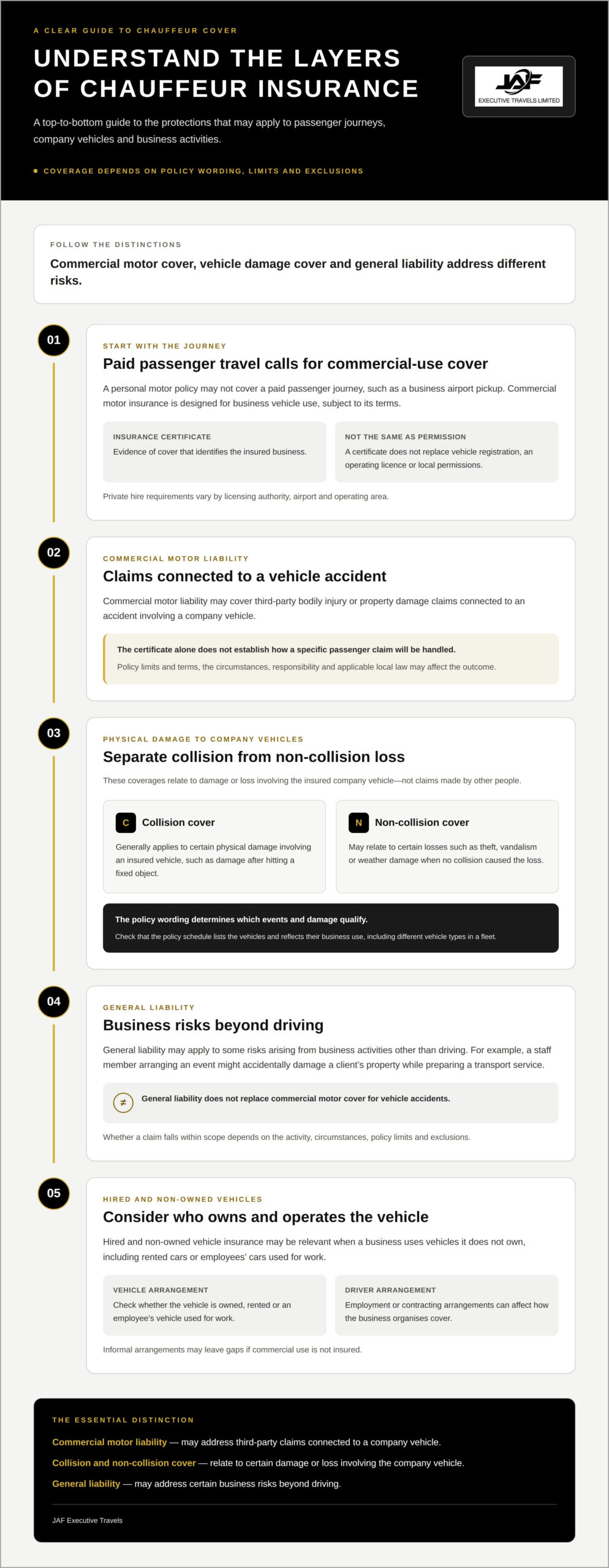
A personal motor policy may not cover paid passenger journeys, such as a business airport pickup. Commercial motor insurance is designed for business vehicle use and may cover liability arising from company operations, subject to the policy terms. A certificate of insurance identifies the insured business and provides evidence of cover. It does not replace vehicle registration or any required operating licence.
Private Hire Licensing and Insurance
Private hire vehicles may need commercial registration and insurance suited to passenger transport. Requirements vary by licensing authority, airport and operating area, so the rules depend on where the vehicle operates. In the UK, private hire vehicles must meet the requirements of the relevant licensing authority. A certificate of insurance and vehicle registration are separate documents, and local operating permissions may also be required.
Passenger Transportation Liability
Commercial motor liability may cover third-party bodily injury or property damage claims connected to an accident involving a company vehicle. Policy limits and terms matter: a certificate alone does not establish how a specific passenger claim will be handled. Responsibility, circumstances and applicable local law may also affect the outcome. General liability does not replace commercial motor cover for vehicle accidents.
Employee and Non-Owned Vehicle Coverage
Hired and non-owned vehicle insurance may be relevant when a business uses vehicles it does not own, such as rented cars or employees’ cars used for work. The driver’s employment or contracting arrangement can also affect how the business organises cover. Informal arrangements may leave gaps if commercial use is not insured. Workers’ compensation requirements vary by jurisdiction, and premiums depend on factors such as vehicle use, operating area, drivers and selected cover, not one universal rate.
Collision and non-collision coverage for company vehicles
Commercial motor liability and physical damage cover serve different purposes. Collision and non-collision cover relate to damage to the company vehicle, rather than claims made by others. This distinction matters when considering how a chauffeur business protects its fleet during airport journeys, business travel and time between bookings.
Collision coverage and vehicle damage
Collision cover generally applies to certain physical damage involving an insured vehicle. For example, a chauffeur-driven saloon might be damaged after hitting a fixed object while travelling between appointments. The policy terms determine what damage qualifies and how a claim is handled. The insured vehicle and its stated business use matter, so the policy should reflect how the company actually operates.
For a fleet, consider how the policy lists each vehicle and its use. A business operating executive saloons alongside passenger vans should understand which vehicles have physical damage cover. A certificate provides evidence of insurance, while the policy wording sets out the cover itself.
Non-collision coverage and other vehicle loss
Non-collision cover generally relates to certain vehicle losses, such as theft, vandalism and weather damage. For example, severe weather could damage a vehicle parked between scheduled journeys. This differs from collision cover because the loss does not result from a collision. The policy terms still determine which events and damage are covered.
Cover depends on the policy wording, limits and exclusions. When reviewing vehicle protection, a business should distinguish collision damage from theft or weather-related loss. Neither type of cover means every incident or repair is automatically included.
How the coverages differ
Collision and non-collision physical damage cover address different types of loss to company vehicles. A policy schedule can identify insured vehicles and relevant terms for their business use. For example, the fleet arrangements should account for both a saloon used for executive journeys and a van used for passenger transfers. Understanding the distinction helps separate cover for damage to company vehicles from cover for other claims.
General liability insurance
For a chauffeur business, general liability may relate to claims arising from business activities other than driving. Its role depends on the policy wording, limits and exclusions. To understand the cover, consider what activity led to the allegation, who was harmed and whether the incident arose from the company’s operations.
For example, a staff member arranging an event might accidentally damage a client’s property while preparing a transport service. This differs from damage caused by the chauffeur vehicle itself. General liability may apply to some business-related risks of this kind, depending on the policy. The circumstances and policy terms determine whether a claim falls within its scope.
Policy limits matter too. They set the maximum amount available for covered claims, while exclusions describe circumstances the policy does not cover. A business assessing its exposure can consider the work it does, where staff work and the interactions their duties involve. Event coordination, for instance, may create a different exposure from routine administrative work.
For passengers and corporate travel organisers, the practical point is that insurance covers defined risks, not every inconvenience or dispute connected with a journey. A delay, itinerary change or dissatisfaction with service is not automatically an insured event. The relevant questions concern the alleged harm, its connection to business operations and the policy wording. General liability is one part of understanding how a chauffeur company manages operational risks, not blanket protection against every possible claim.
Does a chauffeur company need hired and non-owned auto insurance?
Hired and non-owned vehicle insurance may matter when a chauffeur business uses vehicles it does not own. Hired vehicles are typically rented or borrowed for business, while non-owned vehicles may belong to employees. These arrangements differ from a company-owned fleet, so the business’s insurance should reflect how each vehicle is used.
For example, a company might rent a vehicle to meet temporary demand or use an employee’s car for a business task. A personal motor policy may not cover paid passenger transport or other commercial use. Hired and non-owned cover addresses a different exposure from insurance on company-owned vehicles, but does not automatically replace commercial motor cover for passenger transport.
The working relationship matters too. A chauffeur may be employed by the transportation company or contracted directly through it. Understanding the arrangement helps clarify who organises the journey and which business the driver represents. Informal driver arrangements can create coverage gaps if the driver’s policy does not cover commercial use.
To understand the arrangement, identify who owns the vehicle, who books the chauffeur and whether the journey involves paid passenger transport. A rented vehicle used for a company journey, for instance, has a different ownership arrangement from a saloon owned and insured by the transportation business. Policy terms determine how cover applies; ownership alone does not establish protection for every business use. Hired and non-owned vehicle insurance addresses certain vehicle-use risks, while commercial motor insurance remains central to passenger transport.
For a planned journey, choose a professional chauffeur arrangement suited to your itinerary and travel needs. Arrange a chauffeur journey with attentive planning for your airport or business travel.
JAF Executive Travels
JAF Executive Travels provides chauffeur services for airport journeys, business travel and private itineraries. Understanding insurance distinctions can inform your travel decision. When choosing a chauffeur service, also consider the vehicle, passenger requirements and planned route.
Choose from Mercedes-Benz S-Class, V-Class and E-Class chauffeur services, or the Range Rover Autobiography Chauffeur Service. Each suits different preferences, from executive travel to journeys for a larger party. Share your itinerary and preferred vehicle when booking so the arrangements can be tailored to your plans.
For discreet, carefully planned chauffeur travel, contact JAF Executive Travels to discuss your journey.
Plan Your Next Journey with Confidence
Knowing what insurance a chauffeur company holds can inform your decision, while your itinerary, timing and preferred vehicle shape the service you need. Treat insurance documents as one part of a considered booking, then focus on practical details such as pickup arrangements and the cabin experience you prefer.
JAF Executive Travels offers Mercedes-Benz S-Class, V-Class and E-Class Chauffeur Services for executive and private travel. When planning your booking, provide your pickup address, flight or appointment time, passenger requirements and any planned stops. These details help match the arrangements to your schedule, whether you need an airport transfer or travel between meetings.
A clear itinerary also helps you decide what kind of journey you want, including the privacy, comfort and arrival experience that suit you. Share your preferences and the purpose of your journey when arranging your booking.
For help arranging your chauffeur journey, contact JAF Executive Travels. Take the next step at your own pace and plan travel around the comfort and discretion that matter to you.
Frequently Asked Questions
What Insurance Should an Event Chauffeur Service Carry?
An event chauffeur service needs insurance that reflects the work involved, including scheduled passenger journeys connected with the event. A business arranging weddings, corporate functions or several venue stops should describe those activities accurately when arranging cover. The event schedule, vehicle ownership and driver arrangements help show whether the policies reflect the service provided, rather than ordinary private vehicle use.
What Should You Consider and What Are the Limitations of Limo Insurance?
Consider how many passengers the vehicle is designed to carry and book within that capacity. Policy terms and exclusions also define the boundaries of cover, so the label “limo insurance” does not explain every covered situation. For an event itinerary with several stops, make sure the vehicle and its stated use fit the planned service. Do not assume one policy description covers every arrangement.
What types of insurance does a chauffeur company need in the UK and worldwide?
A chauffeur company operating across the UK or worldwide may need a combination of cover suited to its vehicles, staff and operating model. A useful review separates owned vehicles from rented or employee-owned ones, then considers employee-related protection and business activities beyond driving. The appropriate mix depends on how the company operates and the requirements in each jurisdiction.
What commercial auto liability limits are required for chauffeur and black car services?
There is no single limit that applies to every chauffeur or black car service across the UK and worldwide. The applicable amount depends on the operating jurisdiction and the service’s classification. Do not assume a figure for one vehicle type or operating arrangement applies to another. The company’s licensing category and route are key to identifying the relevant limit.
Do chauffeur companies need commercial general liability insurance?
Whether a company needs general liability depends on its operations and applicable requirements. A venue, corporate client or property manager may also set insurance conditions in an agreement before an event. Such a contractual request is different from a general legal requirement. For event planning, identify the venue’s written conditions early, as they may specify the evidence or cover required for the booking.
What insurance covers passengers’ injuries and belongings in a chauffeur vehicle?
Cover depends on how an injury or loss occurred and on the relevant policy wording. If a passenger’s belongings are damaged or lost, record what happened, identify the item and keep relevant documentation. If someone is injured, note the journey details and circumstances. These records help describe a claim accurately, but do not determine whether it is covered.

Tom Copper
Tom Copper is a UK-based travel and tourism writer with a deep passion for transforming journeys into compelling stories. Over the years, he has explored both iconic destinations and lesser-known hidden gems, always seeking experiences that create meaningful connections between people and places. His writing reflects a genuine appreciation for culture, history, and adventure, blending practical travel advice with thoughtful personal insights. From vibrant city breaks and scenic coastal escapes to peaceful countryside retreats, Tom shares travel inspiration that feels authentic, relatable, and exciting. When he’s not crafting his next article, you’ll likely find him wandering through local markets, sampling new cuisines, or capturing unique moments through his camera lens. For Tom, travel is never just about ticking destinations off a list—it’s about the stories, emotions, and memories created along the way.
Chauffeur Company Insurance for Airport and Vehicle Coverage
A chauffeur company’s commercial auto insurance is the primary cover for business vehicles, but it…
Vetting and Training Process for Professional Chauffeurs
Orientation is a starting point, not the whole standard. Whether chauffeurs receive ongoing training depends…
London Prom Night Chauffeur for Individuals and Groups
The right prom-night car does more than make an entrance; it helps set the tone…
Chauffeur with advanced driving qualifications for executives
Advanced driving skill is only one part of an executive chauffeur’s value. A chauffeur with…
Door-to-door chauffeur service for London theatre nights
A West End performance should be the evening’s main event, not the journey there and…
Chauffeur Service for Multi-Day Asian Wedding Guest Travel in the UK
Guest transport can be planned across the celebrations, not just for the ceremony. A chauffeur…
Plan Who Rides and How the Groom and Groomsmen Get There
A polished arrival begins well before the wedding day. For transport for the groom and…
Mercedes V-Class Bridal Party Transport for Larger Groups
A Mercedes V-Class can bring bridal-party members or family together in one comfortable vehicle. Wedding…
Professional Female Chauffeur London: Pricing and Bookings
Yes, long-distance journeys can be arranged with a professional female chauffeur in London, not just…